Showing posts with label Book Review. Show all posts

Saturday, March 4, 2017

Book Review: "Grace Is Greater" by Kyle Idleman


Kyle Idleman.  Grace is Greater: God’s Plan to Overcome Your Past, Redeem Your Plan, and Rewrite Your Story.  Grand Rapids, MI: Baker, 2017.  188 pp.  $15.99.

Grace is a major conversation topic within Christianity.  The front matter of this book alone attests to that: Of the 13 advanced praise statements, 11 are from author who have a book with the word “grace” in the title.  It, honestly, leads one to question why we need another book on grace.  The answer, equally simply enough, is that the doctrine of grace is multi-faceted.  It is wide-ranging and requires a multiplicity of voices to help us understand it.  And, as you will quickly learn through his stories, Idleman is one who is learning what grace is all about.

Following an introductory chapter, the book is divided into three sections.  Each section focuses on a particular area of concern, an area that Idleman argues that “grace is greater” than: mistakes, hurt and circumstances.  The first unit focuses on the mistakes that can separate us from experiencing God’s restorative grace (guilt, brokenness, and regrets).  For me, the chapter that really stood out in this section was the chapter on regret (chapter 3).  In this chapter, Idleman explores the difference between regret and shame, with regret being defined as “feeling bad about something you have or haven’t done” (p. 51) and shame being defined as “feeling bad about who you are or how you think you’re being perceived by God or others” (p. 52).

The second unit focuses on the hurts that can prevent us from experiencing God’s healing grace (wounds, bitterness, vengeance and resentment).  For me, the chapter that really stood out in this section was the chapter on vengeance (chapter 6).  It was a refreshing chapter because of Idleman’s opening words: “If you’re in ministry, some people won’t like you.  At all” (p. 103).  As one who has been burned in ministry before, Idleman’s focus on releasing my rights to hold on to that pain was very enlightening.  Ministers are often quick to speak about grace, yet we move slower than most when it comes to extending it.

The third unit focuses on the circumstances that can derail us from experiencing God’s guiding grace (disappointments, weakness and despair).  For me, the chapter that really stood out in this section was the chapter on weakness (chapter 9).  In a culture that has tried to “Christianize” suffering by adopting cliché mantras like “just pray about it” or “God has a plan for your suffering,” Idleman addresses how these trite views actually devalue the powerfully redemptive grace that God offers us through Christ and the daily indwelling of the Spirit. 

Overall, I really liked this book from Kyle Idleman.  It was thoughtful, humorous, decently researched (often a shortcoming of “Christian living” books) and practical.  In addition to the lack of solid research, “Christian living” books are often impractical.  What I mean is that they sound really good, yet they fail in actually providing instruction on how to integrate their concepts into the life of the reader.  While his book is not as practical as books by, say, Arron Chambers or John Ortberg, Idleman does try to give some ways of integrating his concept of accepting God’s grace.  For example, in the chapter on weakness (chapter 9), he asks the reader to state a weakness.  Then he offers two reflective questions to help the reader process why this is a weakness and how to find strength to overcome the weakness.  Finally, he walks the reader through the process of accepting grace and integrating this into the reader’s life.


Finally, this book would make an excellent discussion topic for a small group or book club study, a recommended read for a “new Christians” class, or even as a guide for a preaching series.  Idleman’s easy-to-listen-to style makes for a quick read and can easily be accommodated for the preacher who is looking for a practical way to speak about such a central doctrine of our religion.

Monday, February 6, 2017

Book Review: "Preaching Killer Sermons" by Lane Sebring

Lane Sebring, Preaching Killer Sermons: How to Create and Deliver Messages that Captivate and Inspire (Centreville, VA: Preaching Donkey, 2016), 191 pp. $12.48.

I took my first official preaching course in the Fall 1999 semester.  In that course, I was introduced to a text that laid the foundation for my communicative practice in preaching, tips and tricks that I still use today.  A decade later, when I taught my first introductory preaching course, I used that same book, Preaching that Connects by Mark Galli and Craig Larson (both, then, journalists with Christianity Today).  Their material was simple, basic, almost common-sense.  It was pulled from a combined decades of journalism, writing stories with punch that related to the everyday reader.  Although not necessarily preachers themselves, they wrote a book that, in my opinion, every preacher must read.  It is not a theory book; it is a mechanics book, yet one that will absolutely help your development.

You see, when it comes to preaching, to the art of crafting sermons, it comes down to 3 “Ds”: design, development and delivery.  Design has to do with the scaffolding or main structure that the preacher chooses to build the sermon on.  The design is the “bones” of the sermon.  Whether it is inductive (moving from general to specific), deductive (moving from specific to general), narrative (following a plot) or some other syllogistic form, all sermons, when deconstructed down to their base parts look exactly the same.  It’s basic rhetorical design, something that has been with us since Aristotle.

Now, development deals with the “stuff” that goes into our weekly sermons: textual commentary, illustrations, points of doctrine, and practical applications.  This is the blood, muscles and tissue of the sermon.  It’s the stuff that keeps our sermon alive long enough to be presented to a congregation, small group or digital audience. 

Then, there is delivery, or the way the sermon or message is presented.  To finish off the anatomy lesson, this is the skin of the sermon.  It’s the presentation, how the sermon looks and sounds to the audience.  If we do our jobs correctly, the audience should come away with a captivating, transformative experience that leads them closer to God and challenges them to better resemble their faith in Christ to their fellow humans.

Most books in preaching, essentially, land in one of these three camps, such as The Four Voices of Preaching by Robert Stephen Reid (design) or Speaking with Bold Assurance by Bert Decker and Hershael York (delivery).  Some, such as Expository Preaching by Harold Bryson, Preach by Mark Dever and Greg Gilbert or The Modern Preacher and the Ancient Text by Sidney Greidanus, will try to land in two of the camps (usually design and development or development and delivery).  And, on scarce, blessed occasions, some will pull off the impossible and land in all three camps, such as classic texts like Preaching by Fred Craddock or The Witness of Preaching by Tom Long or Biblical Preaching by Haddon Robinson.  And when those books come along, they remain mainstays in the preacher’s library.

A new contender has come along that claims to be worthy of your and my attention in at least two of these camps, if not all three.  Enter Lane Sebring and his book Preaching Killer Sermons.  It’s a bold claim to be sure, especially from such a young minister and author.  You see, most of the above books have come from seasoned preachers.  Yet, most of their best works, ironically, came after they left the work of weekly preaching.  Preaching Killer Sermons comes from one who is deeply involved in ministry, as he serves as a minister who preaches each and every week.  There is something deeply comforting in that thought, very ethos-centric.  For in entering into this conversation, we are entering into it with one who is like us, who shares our struggles and our successes, and wants to share out of his common experience in an effort to build us up as we preach the gospel.

Ultimately, Preaching Killer Sermons is best understood as a delivery book.  And it is a fantastic book on sermon delivery.  His discussions on sharing the sermon in a way that relates well to our contemporary cultural context without compromising the integrity of the text, delivery mechanics and being intentional about self-care are absolutely worth the cost of this book.  Even his opening chapter on parsing a boring sermon is spot-on.  As I was reading, I found myself shaking my head because I have been guilty of a sin or two (and I have a doctorate in preaching!).  And if that was all this book was about, I would enthusiastically recommend this book for any preacher, novice or veteran. 

However, Sebring tries to do more in his one-stop shop preaching text.  And therein lies the problem.  As I mentioned above, there are three “Ds” to preaching—design, development and delivery.  Sebring nails delivery.  And, for the most part, he does an appropriately-decent job with development.  His main flaw is in design, for three reasons.  First, he claims no underlying theories are being promoted, yet he alludes to Aristotle’s concept of rhetoric as a basic model for communication (p. 112-113).  Second, his chapter entitled “Putting Your Sermon to Work” sounds like it has been inspired by Haddon Robinson’s book Biblical Preaching.  And third, he presents four “outline” approaches to designing sermons (p. 71-79), most of which have been largely dismissed by educators, communicators and preachers alike due to inability of those methods in producing true learning or transformative spiritual growth.


Fortunately, this is only a small portion of his book.  As I also stated above, the true strength in this book is his material on delivery, material that comes from a preacher who is in the pulpit each and every week and who is connecting with unchurched persons.  So, even with my concerns, this is a book that I would recommend…and maybe even start using as a textbook!

Saturday, November 12, 2016

Book Review: 'Listen, Love, Repeat' by Karen Ehan

A few years ago, I sat across from a smiling man who shared a revolutionary idea with me: the whole purpose of our existence is to share God’s love with everyone around us.  Doing so may come in physical expression, in quiet prayer for another, in serving our neighbor, or sharing the gospel with a coworker.  Yet, whatever we do, we must do it in love.  For in doing so, we combat the evil that is present in the world.  That smiling man was Bob Goff, author of the hugely successful devotional book Love Does.  Bob is an internationally known and respected attorney and human rights advocate who advises world leaders, yet he is as friendly as your favorite uncle.  And in the short time that I spent with him, I was humbled and challenged (generally what we called “blessed”) to practice the simple yet profound discipline of love.  Love Does is not groundbreaking in its conceptual framework, yet it is paradigm-shifting in its radical call to practical expression.  Love does the will of God in a broken and hurting world.

Now, this is not a review of Love Does.  However, Goff’s book helps set the context for the book that is the focus of this review—Karen Ehman’s newest volume Listen, Love, Repeat.  It may seem strange for a male writer to review this volume.  To be honest, it is strange.  The included publicity material is from all female reviewers.  And, yet, why is it strange?  I spent one evening reading through several chapters at my local Starbucks while I was waiting on my daughter to finish up her nightly theatre practice.  Before I left, I ordered my daughter a drink for the ride home.  The barrister show the book in my hand and asked me about.  I explained that the focus of the book was about practicing kindness and compassion in the midst of a selfish world.  He thanked me for sharing about the book, stating that he would likely get it and read it himself.

In the same way as Love Does (and Devoted by my friend Arron Chambers), Ehman’s book assumes a couple of things.  First, it assumes (naturally) that you are a follower of Jesus.  Secondly, it assumes that you want to follow Jesus’ command of sharing God’s love and God’s truth with those around you.  And lastly, it assumes that you are not simply going to read this book and then stick it on a shelf; it assumes that you will do what the author recommends. 

In fact, these books—Devoted, Love Does and Listen, Love, Repeat—could serve as a trinity introduction to the basics of practical Christianity.  Devoted could serve as your introduction, giving you the what of the Christian tradition.  Then, you could move on to Love Does and trek along with Goff as he explains why Christians demonstrate love to the world (and don’t we need this right now!).  Then, you could conclude your orientation reading with Listen, Love, Repeat, where you would discover a whole lot of how.  This book is crammed full of practical advice, ranging from recipes to share with your friends to devotional plans to practical challenges for the reader to engage in.  I read Listen, Love, Repeat in two days, really just a few hours.  Yet, what Ehman offers will require a lot of processing, planning and implementing.  However, the lives that can be impacted through her advice and challenges are limitless.

And that is why I liked and highly recommend this book.  I am already thinking back to that conversation that I had with the Starbucks barrister.  It was just a few moments, and we just talked about a book.  Yet, what kind of impact did it have?  What kind of impact will we have if we listen, love and repeat?  That is the challenge presented by Listen, Love, Repeat, a challenge that I hope you will join me in accepting.

Tuesday, April 26, 2016

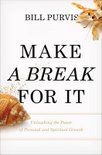
Review: "Make a Break for It" by Bill Purvis

Bill Purvis.  Make a Break for It: Unleashing the Power of Personal and Spiritual Growth.  Grand Rapids, MI: Zondervan, 2016.  216pp.  $21.99.

According to the Merriam-Webster Dictionary, one defines “direction” as “the path along which something moves, lies, or points” or “an order or instruction to be followed.”  Both are fitting definitions when applied to the realm of spiritual development.  On one hand, we, from the moment we are born to the moment we expire, are moving along a direction.  We have a starting point (mine was in December 1978, in Huntington, West Virginia), and we have will have a stopping date (still working on that one).  The time in between our starting point and our stopping point is the direction of our life, or “trajectory,” as one of my college Bible professors referred to.  We begin, we move along for a while, then we end.  Direction.
            On the other hand, we, from the moment we are born to the moment we expire, are following directions.  Some of those directions are instinctual (crying when we are spanked at birth), some of those directions are intentional (the directions that I give my students in order to complete a paper or project), and some of those directions are accidental (pointing blindly at a wrench when fixing an appliance and your son actually brings you the correct item).  Regardless of the purpose of the direction, we will find ourselves following directions throughout the course of our direction of life.  We begin, we move along for a while, then we end.  Direction.
            Yet, should life not be more than simply follow directions as we follow along a direction?  This is the idea that is at the heart of Bill Purvis’ new book Make a Break for It.  As he writes in the introduction, “Do you ever feel as if your whole life is stuck in a traffic jam, on idle as you wait. . .and wait. . .and then wait some more for a lane to open up so you can get on the fast track to where you want to be?  Or maybe you feel more like you’re in a roundabout.  You keep going around in circles, driving past one exit after another because you don’t have any idea where you’re supposed to go next” (p. 11).  As Purvis argues throughout his book, life should be more than beginning, moving along for a while, and then ending.
            Purvis’ story begins somewhat like you would imagine a published testimony to start—a young man trapped in a broken life fueled by vices.  Yet Purvis’ story is not your usual testimony material.  His testimony includes being stabbed in the heart by a pimp who tried to murder him and his friend.  Just let that line sink in for a moment.  Escaping that moment led Purvis to a true “come to Jesus moment”—a hospital bed confessional that leads to a young man committing his life to not only follow Christ but seek to lead others to Christ. 
However, before you part company with Purvis 20 pages in because you—like me—have a boring testimony, I encourage you to stick with him.  This is not Augusten Burroughs’ This Is How, a brash, abrasive therapy session where you almost feel guilty for not being more broken.  [BTW, I like Burroughs’ book.]  Nor does this delve into sappy sentimental religiosity.  The chapters that follow Purvis’ testimony are carefully-crafted conversations about life, redemption and the self-sacrificial love of God.  It is a book about living well, about moving past excuses and criticisms, about choosing mentors well, and about living the adventure of life. 

This book is about direction—about beginning, about moving along for a while, and about ending.  Yet, Purvis argues, all of this direction should be taken with purpose—purpose which is found in God because it is only God who can give us direction for our direction in life.  So, in Purvis’ words, make a break for it—break away from your direction-less life and allow this redeemed journeyman guide you to a better direction for your life.

Thursday, March 5, 2015

Review: "More: From Messes to Miracles" by Tammie Head

There is an ancient practice in Celtic Christianity called the “soul friend.”  Essentially, it was the earliest systematized form of the contemporary practice of mentoring where one Christian seeks guidance, instruction or discipline from another Christian.  In many ways, Tammie Head’s book More functions like a “soul friend.”  Head, a Christian woman who has overcome a great deal of adversity in her life, including a teenage shotgun marriage and escaping the sex trade industry, does not offer a treatise on Christian theology nor does she offer an organized plan for spiritual growth.  What she does offer is a conversation, a conversation about faith.  She is honest about her faults and struggles, especially those about her marriage and pride in ministry.  She does offer some thoughts and reflections on some spiritual disciplines that have been helpful to her, like intercessory prayer and reading scripture.  However the bulk of the content comes in the form of stories collected over a lifetime of spiritual peaks and valleys.  The ultimate goal of her book is simple: God can redeem any messy person and turn him or her into a glorious spiritual miracle.  The chapters do not necessarily follow any particular progression but function more like informal conversations around a dinner table or in a coffee shop.  There is a lot of good stuff here, a buffet of stories and insights that can benefit readers in only one chapter doses or in reading the entire book at once.

As basic and conversational as this book is, there are a few faults that I had with it.  For the most part, these are fairly small details, however I think they are worth noting.  First, there are a few places where the author refers to her readers as “daughters of God.”  Now, I get it—very few men are going to read this book; it is written more for women.  However, as a male reader and as one who gets aggravated when male writers assume only men will read their books, I think Head does herself a disservice by assuming that only women will read her book.  As I mentioned above, there is a lot of good stuff here that can benefit any reader, regardless of gender.  Second, the author gets a little repetitious in some of her comments and stories.  This was not so much of a returning to stories in order to continue telling them as much as it was repeating stories as if that particular story had not been told previously.  Third—and this one is a little theological—the author mixes or equates the roles of God and Jesus in a way that made me scratch my head a time or two.  From an evangelical perspective, I can understand the blurring of Trinitarian personalities because we teach them as one in the same.  However, from an academic perspective, this reflects a lacking in biblical and theological competency that is problematic, especially for skeptical, unchurched readers.

Overall, I think this is a good book that will a helpful read for those who are looking for some encouragement on how God can turn our messes into miracles.

Monday, December 29, 2014

Books I Read in 2014

Each year, I offer the list of books that I read in that calendar year.  In keeping with this tradition, here is the list of books that I read in 2014.  For reviews of most of these, you can check out my Goodreads page or past posts on this blog.  Hope these may inspire your reading habits in 2015!

Books I Reviewed in 2014

  • Henry Cloud, Never Go Back: 10 Things You'll Never Do Again
  • Sharmila Ferris and Hilary Wilder, The Plugged-In Professor: Tips and Techniques for Teaching with Social Media
  • Randy Harris, Life Work: Confessions of an Everyday Disciple
  • Marybeth Hicks, Teachable Moments: Using Everyday Encounters with Media and Culture to Instill Conscience, Character, and Faith
  • Bob Hostetler, Life Stinks...And Then You Die: Living Well in a Sick World
  • Mike Neary, Howard Stevenson and Les Bell, Towards Teaching in Public: Reshaping the Modern University
  • John Ortberg, Soul Keeping: Caring for the Most Important Part of You
  • Robert Pazmino, A Boy Grows Up in Brooklyn: An Educational and Spiritual Memoir
  • Glenn Pemberton, After Lament: Psalms for Learning to Trust Again
  • Carl Prude, Anchored in Light: Understanding and Overcoming the Five Deadliest Threats to Your Faith
Books I Read for Classes I Teach

  • George Bullard, Every Congregation Needs a Little Conflict
  • Dave Hansen, The Art of Pastoring: Ministry Without All the Answers (revised edition)
  • Timothy Keller, Walking with God through Pain and Suffering
  • Thomas G. Long, What Shall We Say? Evil, Suffering, and the Crisis of Faith
  • Daniel Overdorf, One Year to Better Preaching
  • Andy Stanley and Bill Willits, Creating Community: 5 Keys to Building a Small Group Culture
Books I Read for My Last Doctoral Class

  • Dave Bland and David Fleer, Performing the Psalms
  • David Brooks, The Social Animal: The Hidden Sources of Love, Character, and Achievement
  • Roger Fisher and Daniel Shapiro, Beyond Reason: Using Emotions as You Negotiate
  • Glenn Pemberton, Hurting with God: Learning to Lament with the Psalms
  • Fleming Rutledge, And God Spoke to Abraham: Preaching from the Old Testament
Books I Read to Strengthen My Ministry

  • Mark DeVine and Darrin Patrick, Replant: How a Dying Church Can Grow Again
  • David Helm, Expositional Preaching: How We Speak God's Word Today
  • Timothy Keller, Every Good Endeavor: Connecting Your Work to God's Work
  • Erwin McManus, The Artisan Soul: Crafting Your Life into a Work of Art
  • Thom S. Rainer, Autopsy of a Deceased Church: 12 Ways to Keep Yours Alive
  • Philip Yancey, Prayer: Does It Make Any Difference?
Books I Read Because I Like a Good Story

  • Ray Bradbury, Fahrenheit 451
  • Gillian Flynn, Gone Girl
  • Gayle Forman, If I Stay
  • John Green, An Abundance of Katherines
  • John Green, Paper Towns
  • Lois Lowry, The Giver
  • Yann Martel, The Life of Pi
  • Cormac McCarthy, The Orchard Keeper
  • Cormac McCarthy, The Road
  • Arthur Miller, Death of a Salesman
  • Frank Miller, The Dark Knight Returns
  • George Orwell, Animal Farm
  • Ayn Rand, We the Living
  • Rick Riordan, Percy Jackson and the Olympians 1: The Lightning Thief
  • Rick Riordan, Percy Jackson and the Olympians 2: The Sea of Monsters
  • Rick Riordan, Percy Jackson and the Olympians 3: The Titan's Curse
  • Rick Riordan, Percy Jackson and the Olympians 4: Battle of the Labyrinth
  • Rick Riordan, Percy Jackson and the Olympians 5: The Last Olympian
  • Thornton Wilder, Our Town
  • Sun Zhu, The Art of War

Thursday, July 10, 2014

Book Review of "Never Go Back" by Henry Cloud

Henry Cloud.  Never Go Back: 10 Things You’ll Never Do Again.  Secrets Things of God Series.  New York: Howard Books/Simon and Schuster, 2014.  xviii + 249 pp.  $24.99 (hardcover).

Known primarily for the Boundaries series and How People Grow (his collaborations with John Townsend), one may wonder what else Cloud has to offer.  Cloud now finds himself a citizen of an authorial stratosphere that also boasts John Maxwell, Charles Stanley, Chuck Swindoll, Max Lucado, James Dobson and Dallas Willard.  How many different ways can one author write about the same subject?  (One could claim that John Ortberg and Timothy Keller could be on this list, although they vary what they write about although they continue to churn books out at a dizzying speed.)  Each of the author listed above have contributed significantly to our reading lists, and they books sell like hotcakes at a monthly VFW breakfast.  However each of them, including Cloud, have come to a point where their influence has become polarized—you either like them or you don’t like them. 

This, then, is problematic for an author such as Cloud who typically deals with psychological topics from a spiritual perspective, as he does in Never Go Back.  A seminary-trained psychologist, Cloud has never been afraid of hiding his faith nor has he ever backed down from operating out of a faith-based approach to therapy.  He talks about this in the preface as he recounts a time of meeting with a television executive who was afraid that Cloud was a closet religious fanatic.  Cloud reassured the executive (and the reader) that a person of faith can talk about matters of psychology and culture without sounding like a nut job.  This is an important realization because of the theme that Cloud seeks to treat in this book.

The volume is divided into two major sections, following a preface and introduction.  In the introduction, Cloud sets forth his purpose in writing this particular volume.  When I agreed to review this volume, I thought it would be more along the lines of Boundaries—a popular-level treatment on overfunctioning, a controlling nature or the addictive personality.  I was thus surprised when Cloud revealed that this book is actually on repentance.  I have always heard (and, thus, taught) that we repent when we make a conscious change in our lives to walk in a different direction (stop an addiction, leave an abusive relationship, ask forgiveness for gossiping or cursing, etc.).  Cloud argues that part of being a successfully spiritual person is to practice repentance, to realize things about our lives that are weighing us down or keeping us from achieving our goals and deciding not to continue living that way (i.e., stop trying to be someone you’re not just to please another or continue to use failed processes to accomplish tasks).  To Cloud, this is what it means to “never go back.”

This book is certainly written with individual readers in mind, although Cloud argues that it is not to be considered “self-help” because there is no such thing.  We must allow God to work the changes in our lives.  However this will be a valuable resource for preachers and teachers, counselors and spiritual directors because it will help us guide those who come to us for counsel about their spiritual lives.  One of my biggest critiques of sermons is what are we supposed to do with it.  Don’t just preach on repentance; give direction on how people can implement repentance.  This book provides practical, spiritual applications for how we can change our lives. 

I really enjoyed this book, and I would highly recommend it.  If you were to read anything by Cloud, I would heartily recommend this and Necessary Endings.  I think Never Go Back might actually be better than Boundaries simply because he has twenty more years of experience under his belt. 

Rob O’Lynn, ABD
Assistant Professor of Preaching and Ministry
Kentucky Christian University

Disclosure of Material Connection: I received this book free from the Publisher and was asked to review it.  I was not required to write a positive review.  The opinions I have expressed are my own.  I am disclosing this in accordance with the Federal Trade Commission’s 16 CFR, Part 255: “Guides Concerning the Use of Endorsements and Testimonials in Advertising.”

Monday, April 14, 2014

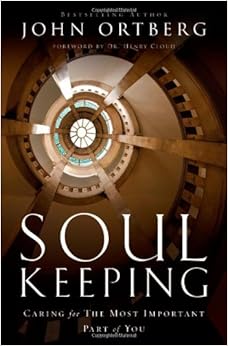
Review: Soul Keeping


John Ortberg.  Soul Keeping: Caring for the Most Important Part of You.  Grand Rapids, MI: Zondervan, 2014.  207 pp.  $22.99.


Peter the Apostle once wrote of his fellow apostle Paul that Paul wrote to Christians out of “the wisdom given him” although some of his writings are “hard to understand” (2 Peter 3:15-16).  I feel this way about the writings of Dallas Willard.  Willard was such a wise Christian, a man full of immense learning and inscrutable humility.  However, I have struggled to finish any of his books—let alone understand what he is writing about.  Yet, as with Paul the Apostle, I am immensely thankful for the life of Dallas Willard.  For one thing, Willard mentored John Ortberg. . .and I love Ortberg’s writings.  Like Peter the Apostle, Ortberg communicates the deep teachings of Christianity in a way that the majority of us can understand.  In many ways, Romans and 1 Peter communicate similar theological messages.  In like fashion, Willard and Ortberg communicate similar messages regarding the spiritual life.  The Life You’ve Always Wanted (Ortberg) is the layman’s version of Spirit of the Disciplines (Willard); When the Games Is Over, All the Pieces Go Back in the Box (Ortberg) is the layman’s version of Revolution of Character (Willard); Soul Keeping (Ortberg) is the layman’s version of Renovation of the Heart (Willard).  In reading Soul Keeping, I was able to listen in on conversations between pupil and teacher and also to see the mantle of spiritual director move from Willard to Ortberg.

However, if this is all that Soul Keeping is about, then I cannot honestly recommend it to anyone except those who are practicing spiritual directors.  Thankfully, as is common with Ortberg’s works, there is always much more going on beneath the surface.  The volume does serve as a form of extended eulogy for Willard.  It is evident that Ortberg’s extensive ministry that has impacted the lives of so many (including myself and my students who have read Ortberg’s books in their classes) was shaped by the ministry of Dallas Willard.  Willard demonstrated how to care for one’s soul.  Through a lengthy relationship, Ortberg picked up on these lessons and implemented them into his own life, and now communicates those messages in his own books, sermons and workshops. 

In this volume, Ortberg tackles the topic of the soul and how to care for it.  His volume is divided into three major sections.  In the first section, he asks and answers the question of what defines a soul.  According to Ortberg, the “soul is what integrates your will (your intentions), your mind (your thoughts and feelings, your value and conscience), and your body (your face, body language, and actions) into a single life” (p. 43).  A healthy soul, Ortberg argues, is connected with God and functions with integrity.  The challenge, then, is how to develop a healthy soul that functions with integrity.  This is the focus of the second section.  In this section, Ortberg outlines nine “needs” of the soul (e.g., a keeper, a future, rest, freedom and gratitude).  This section is the heart of Ortberg’s book.  Delivered in his classic narrative style, Ortberg clearly defines each “need” and then succinctly delivers avenues that the reader can take to develop a healthy soul.  For example, in the chapter entitled “The Soul Needs Rest,” Ortberg outlines a “cycle of grace” that flows from Jesus’ teaching in Matthew 11:28-30 about his yoke of discipleship (p. 126-127).  The cycle flows from acceptance to sustenance to significance to achievement.  Each movement is centered within grace, which allows us to let go of the need to prove ourselves so that we can find spiritual rest in Christ.  At the end of the chapter, he talks about “doing nothing” and simply enjoying God’s presence.  Throughout the volume, I kept coming to the same conclusion: simple yet profound.

In my humble opinion, the mantle of spiritual director has passed from Dallas Willard to John Ortberg.  Willard will continue to influence us through his books, as he has now gone to receive his eternal reward.  Ortberg continues the legacy of thoughtful, practical spiritual direction through writing in Soul Keeping.  It is likely his best work on spiritual formation, and that is saying something.  However, this does not mean that the volume is perfect.  There are portions of the book where simple prose falls into syrupy simplicity.  However Ortberg does not stay there too long.  Additionally, his views regarding the original sin come out in the chapter on freedom (specifically on p. 151).  While this is certainly not the place to debate the various points of the determinist doctrine, I do believe that it is important to highlight this for potential readers.  Fortunately, Ortberg does not dwell on this, although it central to his belief structure on sin.  Despite these concerns, however, I heartily enjoyed reading Soul Keeping and drinking deeply again from Ortberg’s (and, conversely, Willard’s) well of spiritual wisdom, and gladly recommend it. 

Rob O’Lynn, MDiv
Assistant Professor of Preaching and Ministry
Kentucky Christian University

Disclosure of Material Connection: I received this book free from the Publisher and was asked to review it.  I was not required to write a positive review.  The opinions I have expressed are my own.  I am disclosing this in accordance with the Federal Trade Commission’s 16 CFR, Part 255: “Guides Concerning the Use of Endorsements and Testimonials in Advertising.”

Wednesday, April 9, 2014

Book Review: After Lament (ACU Press Book Club)

Glenn Pemberton.  After Lament: Psalms for Learning to Trust Again.  Abilene, TX: ACU Press, 2014.  220 pp.  $17.99

Thirty years ago, OT scholar Walter Brueggemann, in his book The Message of the Psalms[1], developed the labels of “orientation” (a time of praise), “disorientation” (a time of suffering) and “new orientation” (a time of restoration) as an approach to studying Psalms.  Since its publication, Brueggemann’s cycle of orientation has become the standard paradigm for interpreting and preaching the psalms.  Pemberton has already followed in Brueggemann’s footsteps by focusing on psalms of “disorientation” in his previous volume Hurting with God.[2]  Now, in this new volume, Pemberton indicates that he will be moving on to psalms of “new orientation” to demonstrate how lament moves us toward mature faith in God through the image of a wagon wheel.  With lament at the center, each chapter focuses on a different “spoke”—a different type of psalm—that comes out of lament and brings about that “new orientation” (e.g., psalms of trust, thanksgiving psalms and wisdom psalms).  The volume concludes with a look at some of Pemberton’s “case studies” that he has examined in both volumes.

In terms of evaluation, Pemberton’s volume has both strengths and limitations.  In terms of strengths, this volume speaks with the same pastoral voice as his previous volume Hurting with God.  Pemberton has experienced an immense amount of suffering in a short time, and he shares his suffering in such a way that we find a kindred spirit in these pages rather than a disconnected scholar who has never experienced a moment of anguish.  Additionally, this volume effectively compliments Hurting with God in that Pemberton spends most of this volume focusing on the psalms of “new orientation.”  Although he continues to look at the lament psalms in an effort to bring these texts back into the church’s language and to make us comfortable with them, he does focus a great deal on the prayers and hymns of bygone saints who have emerged from their suffering more confident in their faith.  He is quick, though, to note that “happily ever after” is not a guarantee of “new orientation.”  The sickness or sin is still present; however our hope in God has matured.  Lastly, the general strength of this volume—as with Hurting with God—is the practical approach that the volume takes.  Pemberton has not written for the scholar but for the student, everyday church member and preacher.  His exegesis, if not slightly tinged by his new normal of daily suffering, is solid and communicated with the care and creativity of a veteran preacher. 

However, this does not mean that this volume is free of critique.  There are a couple of minor technical issues that I must address: 1) The boldfacing of selected Psalms is not consistent throughout the volume, and 2) not all of the referenced material makes the Works Cited or Recommended Bibliography sections.  These are minor points of critique, yet I think their mention is warranted.  Now, on a larger scale, there are three major points of critique that I have with this volume.  First, while I appreciate the personal nature with which he writes, I fear that Pemberton borders on using his writing as a form of self-medication.  As someone who has endured a different type of suffering, I can resonate with Pemberton.  There needs to be a place for people of faith to address our concerns to our God.  Yet, drowning in our own sorrows only perpetuates our sorrows.  Second, although the title indicates that he is going to move beyond the psalms of “disorientation,” Pemberton continues to focus predominately on such psalms.  The bulk of this volume rests in that unsettled upward curve between crisis and stability rather than fully moving to “new orientation.”  Third, his “spokes” paradigm is disconnected.  Pemberton envisions the psalms of “disorientation” as the center of a wheel and the psalms of “new orientation” as the spokes that come out of the center.  Taken collectively, he argues, these spokes form a wheel of faith that allows us to continue moving spiritually.  However, the spokes operate more like fan blades.  They are certainly connected to the center, yet they are not connected to one another.  Lament can lead this way or that way, however there is nothing that connects them to one another.  

Still, despite my concerns, this is a solid study and a needed pastoral voice in our religiously shallow world.  If you are not hurting, someone close to you is.  These texts can be your words of solace to them.  If you are hurting, Pemberton gets you.  He understands your pain and wants to help you discover the words you need to offer to God.  This book, along with Hurting with God, would make for a great Bible study (discussion questions are included).  I would also recommend both volumes to the undergraduate instructor who is teaching a text course in Psalms.  That being said, I hope that Pemberton writes a third volume, an “orientation” volume, that will complete the cycle.   

Rob O’Lynn, MDiv
Assistant Professor of Preaching and Ministry
Kentucky Christian University

Disclosure of Material Connection: I received this book free from ACU Press/Leafwood Publishers as part of their ACU Press Bookclub Program.  I was not required to write a positive review.  The opinions I have expressed are my own.  I am disclosing this in accordance with the Federal Trade Commission’s 16 CFR, Part 255: “Guides Concerning the Use of Endorsements and Testimonials in Advertising.”


[1]Walter Brueggemann, The Message of the Psalms: A Theological Commentary (Minneapolis: Augsburg, 1984).
[2]Glenn Pemberton, Hurting with God: Learning to Lament with the Psalms (Abilene, TX: ACU Press, 2013). 

Wednesday, February 5, 2014

Book Review: Anchored in Light by Carl Prude Jr.

Carl Edwin Prude, Jr.  Anchored in Light: Understanding and Overcoming the Five Deadliest Threats to Your Faith.  Abilene, TX: Leafwood Publishers, 2013.  240 pp.  $14.99.

In the world of religious writing, spiritual formation and “Christian living” are terms that can encompass a broad range of material.  On one end of the pendulum, there is writing that is so sweet and syrupy that it makes your teeth hurt.  On the other end of the pendulum, there is writing so dense and profound that you get a headache reading the table of contents.  Most of what is released under the title of “Christian Living” is beneficial for spiritual formation and theological maturity, although not all.  The trick, then, is not finding what will sell but what will be helpful to seekers as they travel along their spiritual journey.  In his volume Anchored in Light, Carl Edwin Prude, Jr., seeks to offer something to substance to the spiritual formation conversation.

The premise for his argument is simple enough: there are five “furies” (based on the ancient Greek concept of natural forces that seek to disrupt our lives) that seek to our spiritual journeys.  These furies are mindsets that develop when we “respond to situations in a worldly manner” and cause us to lose our spiritual moorings (p. 25).  They include “processing without progressing” (we don’t learn from our actions and continue in a dysfunctional cycle), “entrenched in stench” (we succumb to unhealthy emotional responses) and “are we there yet” (we live with unreal expectations).  On their own, each of these furies can ruin us spiritually if we allow them a foothold into our lives.  However, Prude offers five spiritual “anchors” that can help us overcome these furies and grow spiritually.  These anchors are “space yourself” (focus on trusting God in all circumstances), “pace yourself” (focus on discerning God’s timetable), “waste yourself” (focus on embracing God’s grace), “place yourself” (focus on accepting God’s personal design) and “grace yourself” (focus on following God’s leading).  The bulk of Prude’s book focuses on these anchors, identifying scriptural underpinnings and explaining practical applications for each.  The book ends with a call to discipleship that embraces the five anchors.  The book also includes an appendix that outlines his “10 Functions” of the spirit, soul and body.

Overall, I found Prude’s book to rather easy to read.  He has a pleasant conversational tone that reminded me of John Ortberg’s style of writing books with incredibly long titles.  Like Ortberg, the book is full of stories (both from the Bible and from his own life) that play out the concepts that Prude is discussing.  This gives a tangible feel to his argument, something that is often missing from “Christian Living” books that mostly focus on discerning “principles” for growth.

However, there are some issues with this volume that make me hesitant to recommend it as heartily as I would like to.  First, Prude takes more of a pop-psychology approach to his subject matter, taking a common self-help principle and attaching some Bible to it in order to spiritualize it.  For example, in chapter 7 (“Place Yourself”), he builds his entire argument for spiritual identity on Hippocratic concepts.  Although Tim LaHaye popularized this concept in his book Spirit Controlled Temperatments, it has been largely rejected by pastoral care scholars and spiritual writers.  Additionally, some of his material is difficult to wade through.  Chapters 7 and 8 are specifically susceptible to this as Prude seems to circle around an idea yet it never quite able to land his thoughts.  Finally, I question some of his research for the book.  I will honestly admit that this is the academic in me coming out.  However, when an author quotes another, it is good form to reference where the quote came from.  Prude only does this for about half of his sources.  Also, he relies on Wikipedia for some of his more technical research in psychology, a research trick that would receive a failing grade in most introductory composition courses.  All in all, however, this is not a bad book.  It does have some useful things to say.  Yet it should be read within the company of other books on spiritual formation and pastoral psychology.

Rob O’Lynn, MDiv
Assistant Professor of Preaching and Ministry
Kentucky Christian University


Disclosure of Material Connection: I received this book free from ACU Press/Leafwood Publishers as part of their ACU Press Bookclub Program.  I was not required to write a positive review.  The opinions I have expressed are my own.  I am disclosing this in accordance with the Federal Trade Commission’s 16 CFR, Part 255: “Guides Concerning the Use of Endorsements and Testimonials in Advertising.”

Friday, January 17, 2014

2014 Reading List (I Think)

As promised on Wednesday, here is what I am looking to read in 2014.  They may inspire you, or you may think I'm nuts for reading them.  My reading plan for the first part of this year is to read 1 novel, 1 theological text, and 1 ministry text each month, since I have additional course texts to read.  Think I might like something you're reading?  Leave me a comment or sent me an email!  Happy reading!

Books I am Reviewing

  • Carl Prude, Anchored in Light (ACU Book Club blog)
Books I am Reading for Classes I Teach

  • David Hansen, The Art of Pastoring, rev. ed. (Introduction to Ministry)
  • Timothy Keller, Walking with God through Pain and Suffering (Providence and Suffering)
  • Thomas Long, What Shall We Say? (Providence and Suffering)
  • More will be added, I am sure, when my Fall schedule rolls around
Books I am Reading for My LAST Doctoral Class

  • Dave Bland and David Fleer, ed., Performing the Psalms
  • David Fleer and Dave Bland, ed., Preaching the Eighth-Century Prophets
  • Glenn Pemberton, Hurting with God
  • Fleming Rutledge, And God Spoke to Abraham

Books I am Reading for Fun (Fiction/Philosophy)

  • Ray Bradbury, Fahrenheit 451
  • Max Brooks, World War Z
  • Lewis Sinclair, Elmer Gantry
  • Cormac McCarthy, The Road
  • Arthur Miller, Death of a Saleman
  • Jose Ortega y Gassett, Revolt of the Masses
  • George Orwell, Animal Farm
  • Ayn Rand, We the Living or Atlas Shrugged
  • Philip Roth, The Plot Against America
  • Charlie Starr, Light
  • Thornton Wilder, The Bridge of San Luis Rey
  • Jack Wolf, The Tale of Raw Head and Bloody Bones
Books I am Reading for Fun (Homiletics)

  • Kenton Anderson, Choosing to Preach
  • Charles Bartow, God's Human Speech
  • Charles Campbell, The Word Before the Powers
  • Lucy Hogan and Robert Stephen Reid, Connecting with the Congregation
Books I am Reading for Fun (Ministry)

  • Timothy Keller, Center Church (for some consulting work)
  • Melick and Melick, Teaching that Transforms (for my dissertation; yes, this is it!)
Books I am Reading for Fun (Theology)

  • Timothy Keller, Counterfeit Gods
  • Timothy Keller, Every Good Encounter
  • Timothy Keller, Generous Justice
  • Timothy Keller, Jesus the King (aka, King's Cross)
  • Eric Metaxas, Bonhoeffer
  • Philip Yancey, Prayer
  • Philip Yancey, What's So Amazing about Grace?

Wednesday, January 15, 2014

2013 Reading List

Note: I realize it is a tad late, given today is January 15.  However, I have traditionally shared my reading list from the previous year, and I realize that a few of you have asked about it.  So, with that in mind, here is what nourished me spiritually and academically in 2013.  On Friday, I will post my preliminary reading list for 2014.

Books I Reviewed

  • David T. Bourgeois, Ministry in the Digital Age (for Stone-Campbell Journal)
  • Carpenter, Sweet and Blythe, Introduction to Applied Creative Thinking (for Teaching Theology and Religion)
  • Keith Francis and William Gibson, ed., The Oxford Handbook of the British Sermon, 1689-1901 (for Stone-Campbell Journal)
  • Gregory Hunt, Leading Congregations through Crisis (for Stone-Campbell Journal)
  • Rita Schulte, Shattered (for ACU Press "Book Club" blog)
Books I Read for Classes I Teach

  • David Fleer and Dave Bland, ed., Preaching Mark's Unsettling Messiah (Expository Preaching)
  • George Hunter, The Celtic Way of Evangelism (Evangelism in the Local Church)
  • Charles Talbert, Reading Luke, rev. ed. (Gospel of Luke)
  • N. T. Wright, The Early Christian Letters for Everyone (General Letters)
  • Philip Yancey, What Good Is God? (Providence and Suffering)
Books I Read for My Dissertation

  • Karl Barth, Homiletics
  • Joan Bolker, Writing Your Dissertation in Fifteen Minutes a Day
  • Raymond Collins, 1 & 2 Timothy and Titus
  • Edward Farley, Practicing Gospel
  • Luke Timothy Johnson, Letters to Paul's Delegates
  • Kostenberger and Wilder, ed., Entrusted with the Gospel
  • Abraham Malherbe, Paul and the Popular Philosophers
  • Andrew Purves, Pastoral Theology in the Classical Tradition
  • Andrew Purves, The Crucifixion of Ministry
  • Andrew Purves, The Resurrection of Ministry
  • Ronald Sisk, The Competent Pastor
  • Paul Scott Wilson, Preaching and Homiletic Theory
  • Frances Young, The Theology of the Pastoral Letters
Books I Read for Fun

  • Natalie Babbitt, Tuck Everlasting
  • Bonnie Baeder, Who Was Martin Luther King, Jr.?
  • Augsten Burroughs, This Is How
  • Paulo Coelho, The Alchemist
  • Ian Fleming, For Your Eyes Only
  • Ian Fleming, From Russia with Love
  • Ian Fleming, Goldfinger
  • Ian Fleming, Man with the Golden Gun
  • Ian Fleming, Octopussy and The Living Daylights
  • Ian Fleming, On Her Majesty's Secret Service
  • Ian Fleming, The Spy Who Loved Me
  • Ian Fleming, You Only Live Twice
  • Barbara Kingsolver, The Poisonwood Bible
  • C. S. Lewis, The Chronicles of Narnia: The Voyage of the Dawn Treader
  • Alan Paton, Cry, the Beloved Country
  • Robert Louis Stevenson, The Strange Case of Dr. Jekyll and Mr. Hyde
  • J. R. R. Tolkien, The Hobbit
  • Leo Tolstoy, The Death of Ivan Ilyich
Books I Read for Seminars

  • C. Leonard Allen, Things Unseen (Theology in Ministry)
  • O. Wesley Allen, Determining the Form (Sermon Development and Delivery)
  • Chris Altrock, Preaching to Pluralists (Connecting Preaching with the Congregation)
  • Bartholomew and Goheen, The Drama of Scripture (Connecting Preaching with the Congregation)
  • Kennon Callahan, Small, Strong Congregations (Ministry in Small and Middle-Sized Churches)
  • Ron Crandall, Turnaround and Beyond (Ministry in Small and Middle-Sized Churches)
  • Ruth Ann Gaede, ed., Transitions in Congregations (Ministry in Small and Middle-Sized Churches)
  • Hicks, Melton and Valentine, A People Gathered (Theology and Ministry)
  • Richard Jensen, Envisioning the Word (Connecting Preaching with the Congregation)
  • Michael Lindvall, The Good News from North Haven (Ministry in Small and Middle-Sized Churches)
  • Andrew Purves, Reconstructing Pastoral Theology (Theology in Ministry)
  • David Ray, The Indispensable Guide for Smaller Churches (Ministry in Small and Middle-Sized Churches)
  • Lyle Schaller, Middle-Sized Church (Ministry in Small and Middle-Sized Churches)
  • James Thompson, Pastoral Ministry according to Paul (Theology in Ministry)
  • Jason Vickers, Minding the Good Ground (Theology in Ministry)
  • Sondra Willobee, The Write Stuff (Connecting Preaching with the Congregation)

Wednesday, October 16, 2013

Book Review: Shattered


Rita A. Schulte.  Shattered: Finding Hope and Healing through the Loses of Life.  Abilene, TX: Leafwood Publishers, 2013.  236 pp.  $14.99.

After spending over a decade in some form of ministry (whether as a minister based in a congregation or a hospital), it still surprises me when people question the validity of their faith when they experience pain and suffering.  It is as if becoming a Christian exempts us from getting hurt.  Yet, the reality is that we will all experience suffering, sometimes over and over again.  And, in her book Shattered, Rita Schulte, a Virginia-based Christian counselor, argues that it is our faith in God that gets us through the “shattered” moments of our lives. 

Schulte lays out her discussion in three major units.  In the first unit (chapters 1-5), she examines the “assaults of lose on the heart.”  Here she focuses on those moments that challenge our faith and our belief in God, encouraging the reader to rethink our perception of God amidst these painful moments.  In the second unit (chapters 6-8), she discusses a strategy for reclaiming our hearts from the suffering that we experience.  Focusing primarily on anger and forgiveness, Schulte challenges us to see that not forgiving those who hurt us is what prevents us from receiving God’s healing.  In the third unit (chapters 9-11), she focuses on how we grow through our suffering and pain.  Here Schulte emphasizes the intentionality that we must have when it comes to growing through suffering.   

Overall, I thoroughly enjoyed Schulte’s book.  In terms of strengths, four stand out.  First, I found her writing style to be very conversational.  Some works on suffering can be technical and clumsy.  Schulte, however, explains the technical aspects of grief and suffering in a simple manner that adds to the impact of her book.  Second, she connected real-life examples with her concepts.  In doing so, the abstract concepts become concrete ideas because we can see how they have played out in the lives of others.  Third, the provided appendices are practical.  For example, Appendix A provides a list of losses that mostly any reader can connect with.  Also, the “Certificate of Debt” exercise provided in Appendix C is quite useful when working with clients or church members who need to address issues of forgiveness.  Finally, her use of Scripture examples were appropriate and applied well.

However, this does not mean that this volume is free from limitations.  Two come to mind.  First, while I appreciated her conversation tone, I thought she was too conversation at times.  It is difficult to balance the heady language of a clinical practitioner with a user-friendly bedside manner.  Overall, it seems that Schulte opted for user-friendly bedside manner.  Second, I think this volume is a little too long.  I think she could have shaved about 70 pages off (primarily in the first unit) and still produced the same material with an even more impactful message.  However, I think this is a solid work on suffering that I would gladly recommend to any who are interested or are seeking guidance in dealing with their own losses.

Rob O’Lynn, MDiv
Assistant Professor of Preaching and Ministry
Kentucky Christian University

Disclosure of Material Connection: I received this book free from ACU Press/Leafwood Publishers as part of their ACU Press Bookclub Program.  I was not required to write a positive review.  The opinions I have expressed are my own.  I am disclosing this in accordance with the Federal Trade Commission’s 16 CFR, Part 255: “Guides Concerning the Use of Endorsements and Testimonials in Advertising.”